Japan Projected to Become World’s Largest LNG Importer in 2026, Surpassing China
11/03/2026 / By Garrison Vance

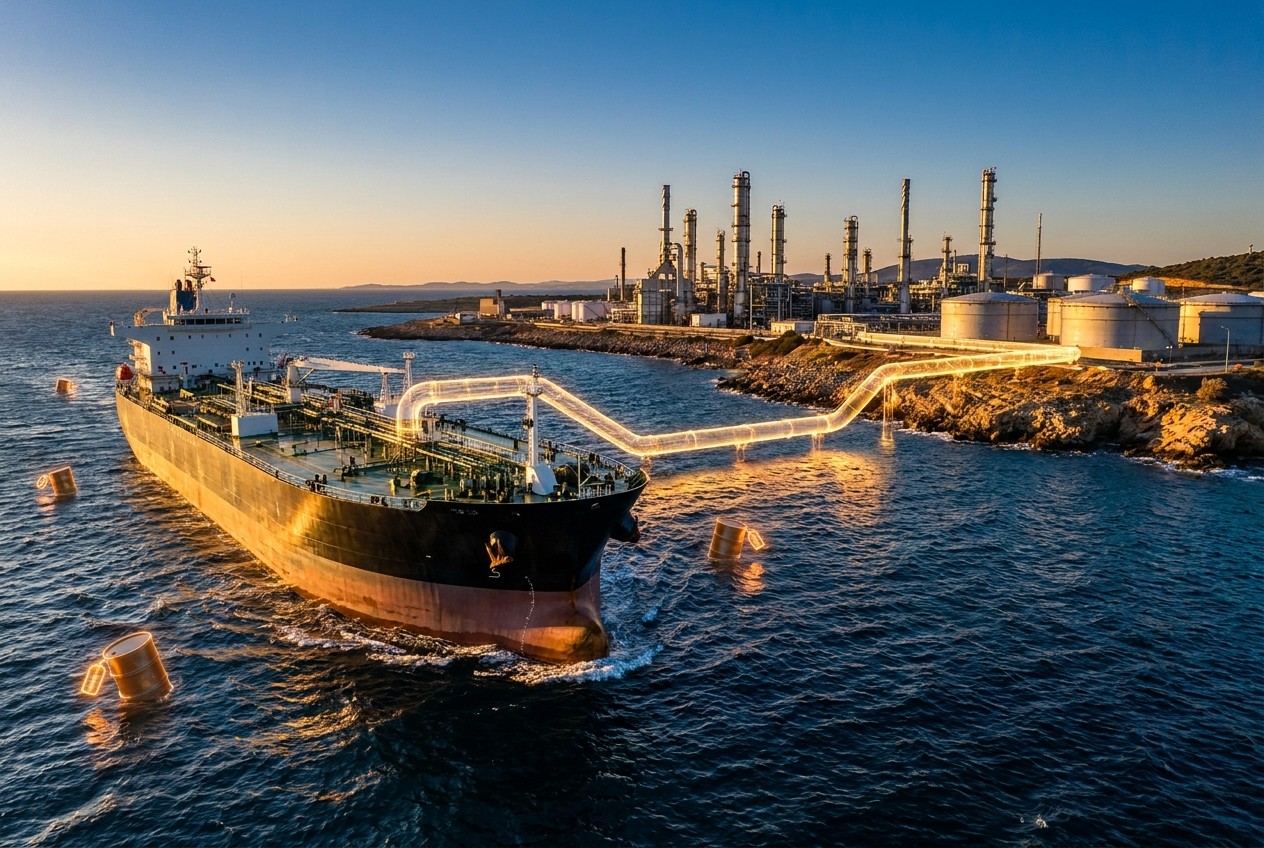
Japan is set to overtake China as the world’s largest importer of liquefied natural gas (LNG) this year, according to estimates from consulting firms ICIS and Kpler, ending China’s four-year run atop the global LNG rankings.
ICIS expects Japan to import approximately 62 million metric tons (MT) of LNG in 2026, compared with 61 million MT for China. Kpler projects 63 MT for Japan and 62 million MT for China, according to the estimates compiled by Reuters [1]. The margins are narrow, but analysts said cumulative volumes since January already put Tokyo slightly ahead of Beijing [2].
China’s LNG Import Decline
China’s LNG imports have fallen sharply in 2026, driven by high global prices, weak domestic demand, and a shifting energy mix. In March, China was on track to import about 3.7 million tons of LNG, the lowest monthly total in eight years, as Qatari and UAE supply went off the market amid the Iran war and Chinese buyers increased domestic gas production and pipeline deliveries, according to tanker-tracking data from Kpler cited by Bloomberg [3].
Official customs data showed China’s LNG imports dropped to a three-year low in 2025, declining 10.6% from 2024 to 68.43 million tons, according to the General Administration of Customs [4]. The country also expanded pipeline gas imports and domestic production as alternatives during the price spike [3].
A report by Columbia University’s Center on Global Energy Policy previously documented how geopolitical disruptions can reshape LNG trade flows. The report found that France became the world’s top buyer of Russian LNG in February and March 2022, surpassing Japan, and imported 4.45 million tons of natural gas between January and October 2022, a 52 percent increase [5].
Japan’s LNG Demand Drivers
Japan’s LNG demand has remained firm despite the same global price pressures affecting China, supported by limited nuclear reactor restarts, seasonal heating and cooling needs, and the country’s heavy reliance on imported fossil fuels. LNG accounts for roughly 30% of Japan’s electricity supply, according to government figures cited by NTD [6].
That capacity gives Japanese utilities flexibility in sourcing and stockpiling, and major buyers such as JERA have moved to strengthen their trading operations. JERA, Japan’s biggest LNG importer and largest power producer, announced in July that it was creating a wholly-owned subsidiary, JERA Global Energy Solutions, to manage its LNG, upstream, low-carbon fuel and shipping businesses in response to increasingly volatile energy markets [7].
Japan has also secured long-term supply relationships outside the Middle East. Mitsubishi finalized a $7.5 billion acquisition of Aethon Energy Management’s Haynesville Shale assets in Louisiana, part of a broader Japanese effort to secure natural gas for its LNG supply chain. Taken together, Japanese multinationals will produce an estimated 4.5 billion cubic feet per day, or about 30% to 35% of the Haynesville region’s total natural gas output in 2026, according to the report [8].
Prime Minister Sanae Takaichi has also prioritized energy security over climate targets. Her government announced in March that Japan would temporarily ease restrictions on coal-fired power plants and may increase nuclear output in fiscal year 2026 to reduce reliance on LNG amid the effective closure of the Strait of Hormuz [6]. The revised strategy departed from Tokyo’s earlier pledges to phase out coal, restrict coal plant operations to 50%t capacity and achieve a 60% cut in greenhouse gas emissions by 2030, according to reports [9].
Global Market Implications
The change in top importer status affects spot market dynamics and supplier strategies, analysts said. Major LNG exporters including the United States, Qatar, and Australia may adjust contract negotiations and shipping routes as Japan’s purchasing patterns diverge from China’s, according to trade data [10].
The Middle East war has severely disrupted global LNG supply. QatarEnergy halted LNG production and declared force majeure to customers in March, a major shock given that Qatar accounts for 20% of global LNG exports, with 80% of those volumes destined for Asia [11].
Asian buyers are watching the shift for energy security and pricing implications. The Strait of Hormuz carries roughly one-fifth of the world’s oil consumption and a similar share of global LNG trade, making it a single point of failure for the global economy [12].
Meanwhile, countries across Asia have turned to coal as an alternative. Coal shipments to South Korea, Japan, and the European Union surged 27% year-over-year in April, according to data from the Baltic and International Maritime Council [13]. In a physical market where LNG poses a more severe constraint than oil, the structural tightening of Asian gas balances has been described as sharper than in crude [14].
Outlook and Uncertainties
Whether Japan retains the top spot depends on weather patterns, nuclear restarts, and the pace of Chinese demand recovery, according to forecasts. Analysts said further data will clarify the trend in coming months [1].
However, LNG demand in Asia has shown signs of recovering from the Iran shock, with China demonstrating signs of returning to the market as of June, according to Reuters commentary [15].
Japan’s electricity prices have also surged during the year. The nationwide power price rose more than 25% week-over-week to $0.19 per kilowatt-hour in October amid soaring LNG and coal costs, according to Bloomberg data cited by OilPrice [16]. In August, the day-ahead power price jumped 20% in one week to the highest level since January 2023, as gas supply disruptions from the Middle East and an intense heatwave pushed up prices and consumption [17].
References
- China set to lose top LNG importer spot to Japan, analysts say. https://pgjonline.com/news/2026/october/china-set-to-lose-top-lng-importer-spot-to-japan-on-weak-demand-analysts-say
- Japan Set to Regain Top LNG Importer Spot Ahead of China. https://energynews.pro/en/japan-set-to-regain-top-lng-importer-spot-ahead-of-china
- Soaring Prices Set To Crash China’s LNG Imports To 8-Year Low. https://www.zerohedge.com/commodities/soaring-prices-set-crash-chinas-lng-imports-8-year-low
- Japan’s LNG imports fall 1.4% in 2025 to 64.98 million tons. https://gasprocessingnews.com/news/2026/01/japans-lng-imports-fall-14-in-2025-to-6498-million-tons/
- CGEP report shows France guilty of HOARDING Russian LNG in early stages of Russia-Ukraine conflict – NaturalNews.com, January 05, 2023.
- Japan Will Ease Restrictions on Coal-Fired Power to Safeguard Energy Supplies. https://www.ntd.com/japan-will-ease-restrictions-on-coal-fired-power-to-safeguard-energy-supplies_1135106.html
- Japan’s Biggest LNG Buyer Creates Standalone Trading Arm. https://www.zerohedge.com/energy/japans-biggest-lng-buyer-creates-standalone-trading-arm
- Mitsubishi finalizes $7.5B purchase of Louisiana gas assets. https://justthenews.com/nation/states/center-square/mitsubishi-finalizes-75b-purchase-louisiana-gas-assets?utm_source=justthenews.com&utm_medium=feed&utm_campaign=external-news-aggregators
- Japan Prioritizes Energy Security Over Climate Targets, Officials Say. https://www.naturalnews.com/2026-07-19-japan-prioritizes-energy-security-over-climate-targets.html
- LNG Country Profiles: Major Exporters and Importers | Market Analysis 2026. https://liquefiednaturalgas.org/countries/
- QatarEnergy Declares Force Majeure As One-Fifth Of Global LNG Supply Goes Dark. https://www.zerohedge.com/energy/qatarenergy-declares-force-majeure-one-fifth-global-lng-supply-goes-dark
- The Strait of Hormuz crisis shows the world still runs on fossil fuels. https://wattsupwiththat.com/2026/03/24/the-strait-of-hormuz-crisis-shows-the-world-still-runs-on-fossil-fuels/
- Worldwide Demand for Coal Spikes Amid Worsening Middle East Energy Crisis. https://www.naturalnews.com/2026-05-13-worldwide-demand-coal-spikes-amid-energy-crisis.html
- US/Iran Energy Shock Damage Is Spreading in Asia. https://original.antiwar.com/dan_steinbock/2026/05/18/us-iran-energy-shock-damage-is-spreading-in-asia/
- LNG demand in Asia recovers from Iran shock as China buys. https://www.reuters.com/commentary/reuters-open-interest/lng-demand-asia-recovers-iran-shock-china-buys-2026-06-09/
- Japan’s Electricity Prices Surge 25% As LNG And Coal Costs Soar. https://www.zerohedge.com/energy/japans-electricity-prices-surge-25-lng-and-coal-costs-soar
- Japan Power Prices Surge To Highest Since 2023. https://www.zerohedge.com/markets/japan-power-prices-surge-highest-2023
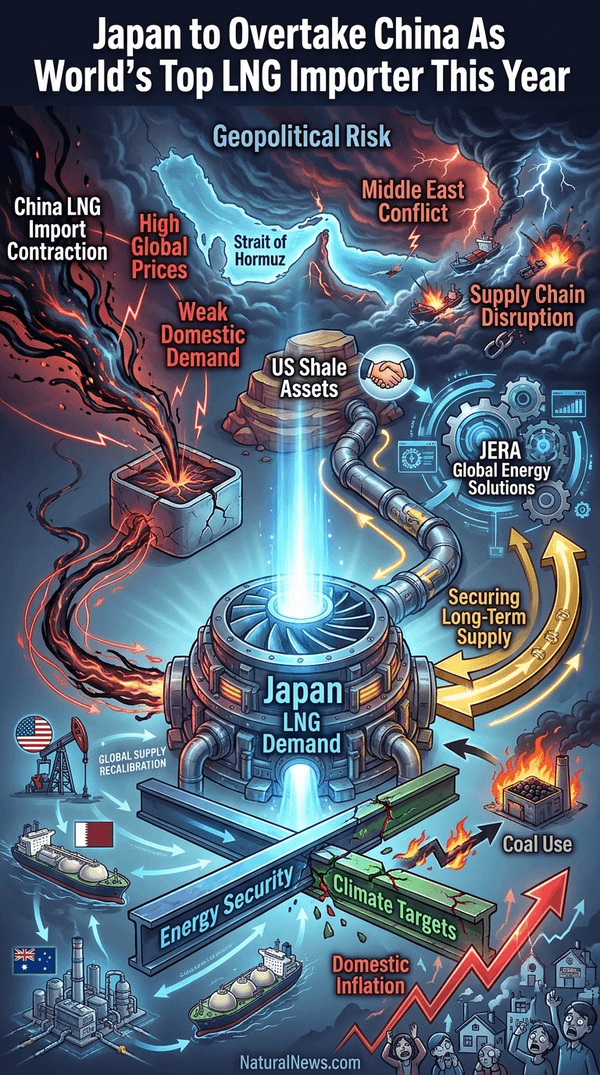
Explainer Infographic
Submit a correction >>
Tagged Under:
big government, China, coal, electricity, energy supply, fuel supply, Japan, liquefied natural gas, LNG imports, LNG market, Middle East, national security, natural gas, power, power grid, products, Qatar, Strait of Hormuz, supply chain, trade
This article may contain statements that reflect the opinion of the author
RECENT NEWS & ARTICLES